
Kilimanjaro Machame Route (6 or 7 Days)
The most scenic and flexible way to reach the Roof of Africa.
- Tanzania
- 7 Days
- From $1750 Per Person
Overview
The Machame Route—often called the Whiskey Route—is one of the most popular and beautiful ways to climb Mount Kilimanjaro.
It’s ideal for trekkers who want stunning scenery, good acclimatization, and a strong chance of reaching the summit.
This climb can be done in 6 or 7 days, depending on your time, fitness level, and how much acclimatization you want.
7 days = better altitude adjustment & higher success rate
6 days = faster pace for strong, well-prepared hikers
Safari Vibes Africa runs this trek with experienced guides, quality equipment, and safety-first standards, giving you confidence every step of the way.
Highlights
- One of Kilimanjaro’s most scenic routes
- Flexible 6 or 7-day itinerary
- Higher summit success with proper acclimatization
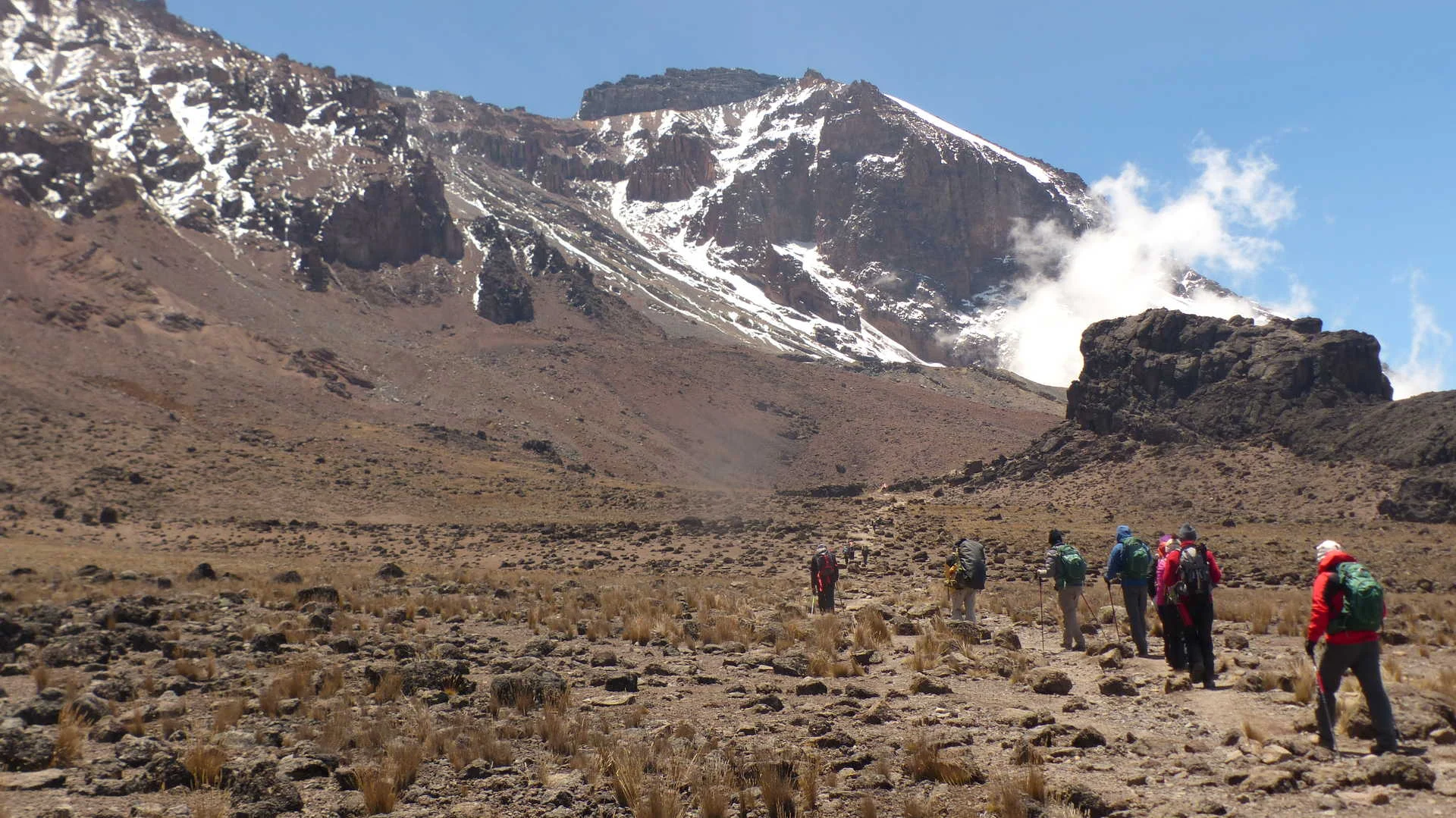
- Walk through rainforest, moorland, alpine desert & arctic zone
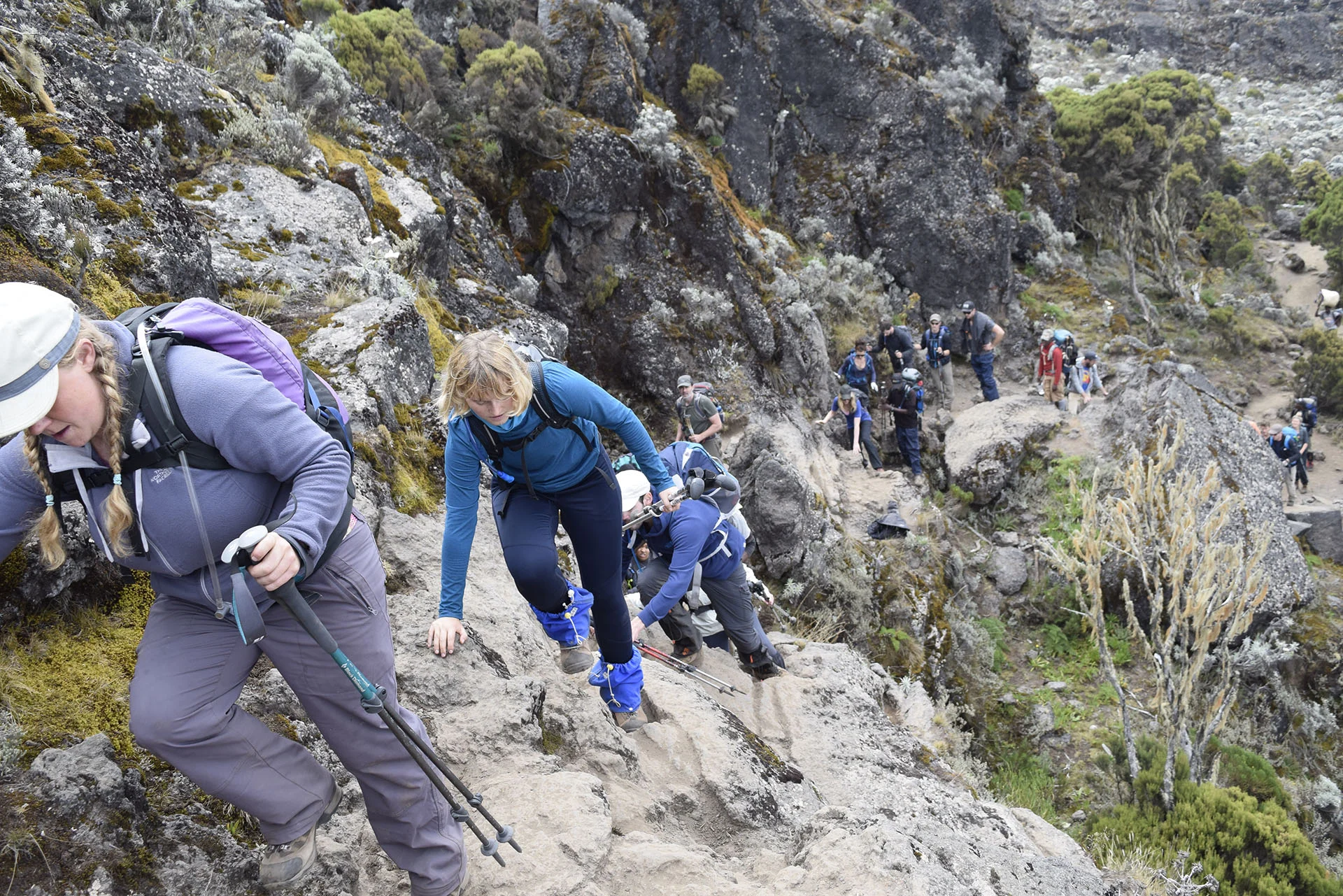
- Climb the famous Barranco Wall
- Sunrise summit at Uhuru Peak (5,895m)
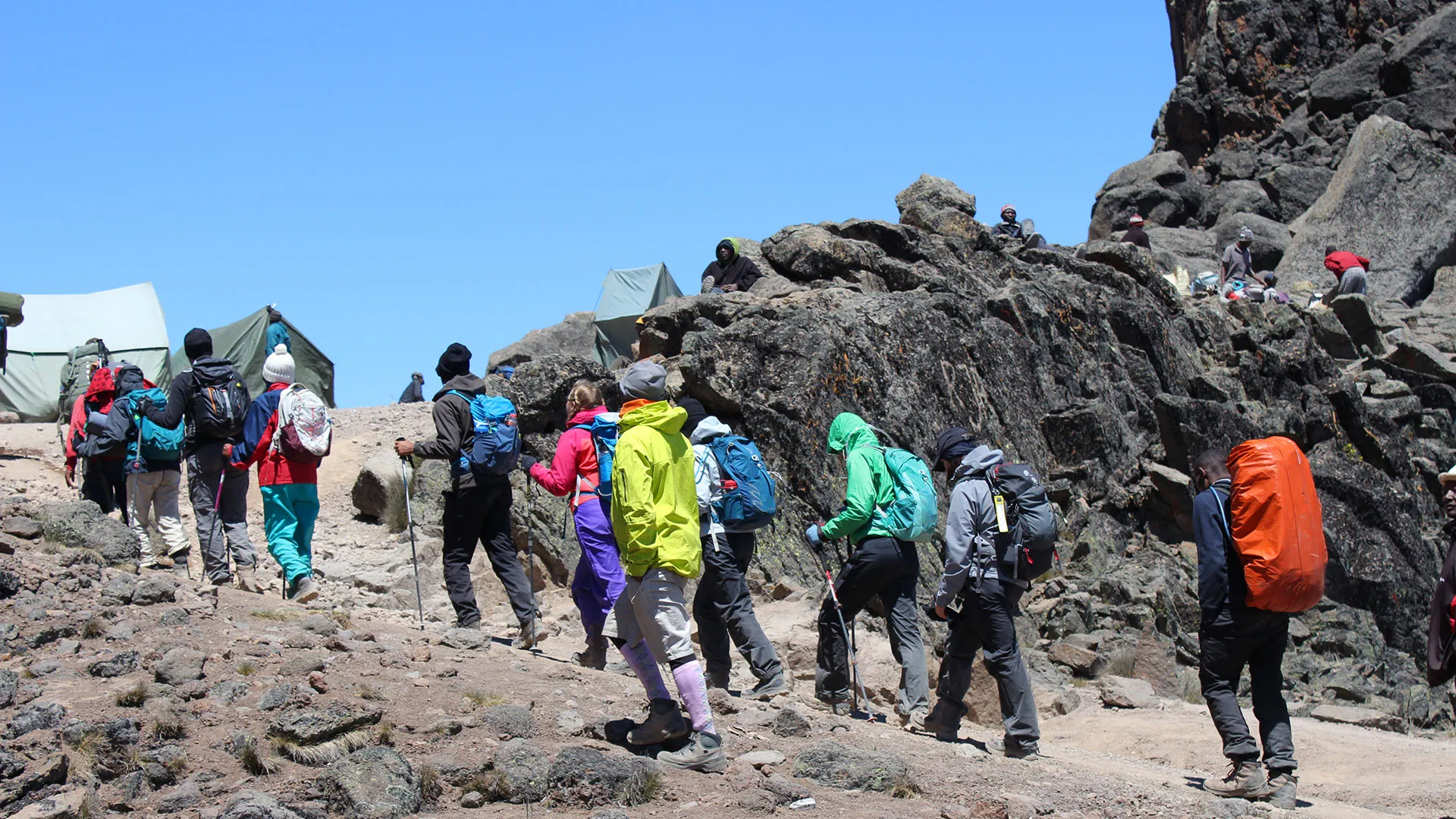
- Professional guides, porters & cooks
- Small groups for better care and comfort
Itinerary
(6 or 7 Days – Adjusted for acclimatization needs)
Day 1: Machame Gate → Machame Camp
Altitude: 1,800m → 3,000m
Start your trek through dense rainforest. Expect lush scenery, birds, and a steady uphill walk to Machame Camp.
Trekking time: 5–7 hours
Day 2: Machame Camp → Shira Camp
Altitude: 3,000m → 3,840m
The forest fades into open moorland with wide views. You cross the Shira Plateau and settle at Shira Camp.
Trekking time: 4–6 hours
Day 3: Shira Camp → Lava Tower → Barranco Camp
Altitude: 3,840m → 4,630m → 3,960m
A key acclimatization day. You hike high to Lava Tower, then descend to Barranco Camp—an important step for summit success.
Trekking time: 6–8 hours
Day 4: Barranco Camp → Karanga Camp (or directly to Barafu on 6-day option)
Altitude: 3,960m → 4,035m
Climb the famous Barranco Wall, a fun and scenic scramble.
7-day route: Continue to Karanga Camp for extra acclimatization
6-day route: Trek onward to Barafu Camp
Trekking time: 4–7 hours (depending on option)
Day 5:
7-Day Option: Karanga Camp → Barafu Camp
Altitude: 4,035m → 4,673m
Short trek to Barafu Camp. Early dinner and rest before summit night.6-Day Option: Barafu Camp → Uhuru Peak → Mweka Camp
Summit attempt begins before midnight.
Day 6:
7-Day Option: Barafu Camp → Uhuru Peak → Mweka Camp
Altitude: 4,673m → 5,895m → 3,100m
Reach Uhuru Peak at sunrise, then descend to Mweka Camp.6-Day Option: Mweka Camp → Mweka Gate
Exit the park and receive your summit certificate.
Trekking time: 12–15 hours (summit day)
Day 7 (7-Day Option Only): Mweka Camp → Mweka Gate
Altitude: 3,100m → 1,640m
A relaxed descent through rainforest to Mweka Gate.
Celebrate your achievement and receive your Kilimanjaro summit certificate.
Trekking time: 3–4 hours
Includes
- Kilimanjaro park, camping & rescue fees
- Professional mountain guides
- Porters & cooks
- All meals on the mountain
- Tents, sleeping mats & dining tent
- Treated drinking water
- Pre-climb briefing & safety checks
- Ethical porter support standards
Excludes
- International flights to/from Tanzania
- Domestic flights (e.g., Dar es Salaam ↔ Arusha) unless added to your package
- Travel insurance (mandatory)
- Visa fees and personal travel documents
- Alcoholic and premium beverages
- Tips & gratuities for driver/guide (customary but discretionary)
- Optional activities
- Personal expenses (laundry, phone calls, souvenirs)
FAQ
Which option should I choose: 6 or 7 days?
If you want higher success and easier acclimatization, choose 7 days.
If you are fit, short on time, and have hiking experience, 6 days can work.
Is Machame Route suitable for first-time climbers?
Yes. It’s one of the best routes for first-timers, especially with the 7-day option.
How difficult is the Machame Route?
Moderate to challenging. No technical climbing—difficulty mainly comes from altitude.
What is the success rate?
7 days: Very high (around 85–90%)
6 days: Slightly lower, but still good with proper fitness and pacing
When is the best time to climb?
Best months are January–March and June–October for stable weather and clear views.
Do I need special climbing skills?
No technical skills required—just good fitness, determination, and proper preparation.